


How to Check Bar Markings, Grade and Quality Certificates

Latest Post
-
01
Oct 23, 2026 Best TMT Bar Manufacturers
How to Check Bar Markings, Grade and Quality Certificates Read More

-
02
Oct 23, 2026 TMT Bar for Construction
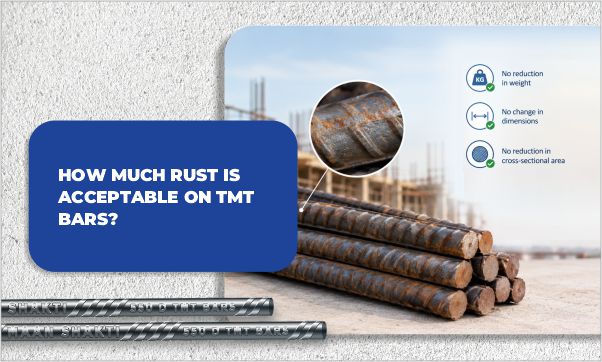
How Much Rust Is Acceptable on TMT Bars for Construction? Read More
Categories
Popular Tags
- TMT Bars
- tmt
- TMT Bar
- Best TMT Bars
- Top Rated TMT Steel Bar Manufacturers
- Supplier of TMT Bars
- bars
- Manufacturer of TMT Bars
- Superior Quality steel TMT Bars
- TMT Bars Suppliers
- TMT Bars Manufacturers
- Bar
- Best TMT Bar Manufacturers
- Earthquake Resistant TMT Bars
- Thermo Mechanical Treated Steel
- tmt wholesale & distributor in west Bengal
- TMT Steel Suppliers Kolkata
- Pure TMT Bars
- Best
- TMT Bar Manufacturers Kolkata
- Corrosion Resistance TMT Bars
- Top TMT Company Assam
- leading TMT Bar producer
- Company
- Best TMT Steel Manufacturers West Bengal
- Best TMT Bar Company Assam
- TMT Bar West Bengal
- manufacturers
- Leading TMT Bars West Bengal
- TMT Bar Company
- Assam
- Top TMT bar manufacturers in West Bengal
- TMT Wholesale Distributor
- Leading Manufacturer of TMT Bars
- TMT Bar Manufacturer
- Steel
- of
- TMT Steel Bars
- Pure TMT Bars Kolkata
- Leading TMT Bar Producer Assam
- Best TMT Brand Assam
- Kolkata
- Suppliers
- West Bengal
- Construction
- Best TMT Bar
- TMT Bar Manufacturers
- Manufacturer of Tmt Saria Assam
- Top
- Leading
- Industry
- TMT Steel Bar
- Best TMT Steel Manufacturers in West Bengal
- Corrosion Resistant TMT Bars
- TMT Steel Suppliers in Kolkata
- TMT Manufacturer
- Top TMT Bar manufacturers
- leading TMT bar producer in Assam
- Earthquake
- Resistant
- Supplier
- Resistance
- Producer
- Pure
- Manufacturer
- TMT Steel Bar Manufacturers
- tmt wholesale distributors in west bengal
- TMT Bar for Construction
- TMT Rebar
- Pure TMT Bars in Kolkata
- Manufacturing TMT Steel Bars
- TMT Rebars
- Best TMT Bars Manufacturers
- Best TMT Bar Companies in Assam
- TMT Bar Company Assam
- Best TMT Bars Company Assam
- leading TMT Bars Manufacturing Companies Assam
- TMT Bars Suppliers in India
- TMT Bar Wholesale & Distributor
- Corrosion Resistance TMT
- Earthquake Resistant TMT
- Most Popular Brand in TMT Manufacturing
- TMT steel bars suppliers in Kolkata
- leading TMT bar manufacturers
- top-rated TMT bar manufacturers
- TMT Bar Manufacturers in Kolkata
- Fe500D
- sariya
- Quality
- Grades
- TMT Bars Company
- TMT Steel Suppliers
- TMT Wholesale
- TMT Company
- TMT Distributor
- Constructions
- TMT Suppliers
- Leading TMT Bars in West Bengal
- steel TMT bars
- Manufacturer of TMT Saria in Assam
- TMT Bar suppliers
- Best Supplier of TMT bars
- Suppliers of TMT Bars
- Top TMT Companies in Assam
- best TMT Bar manufacturers in West Bengal
- TMT bar producer in Assam
- Steel Bar
- TMT Steel
- corrosion resistant
- top-rated
- Corrosion
- Bars Manufacturer
- Bars TMT
- Bars Best
- Bars Corrosion
- TMT Steel Manufacturers
- Top TMT Bar Manufacturer
- TMT Bars Kolkata
- Earthquake in Kolkata
- Earthquake in Northeast India
- Bulk Order TMT Bar Online
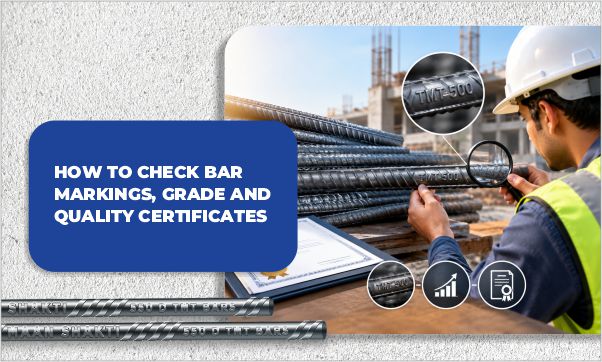
How to Check Bar Markings, Grade and Quality Certificates
Oct 23, 2026 Best TMT Bar Manufacturers

bluant digital
How to Check Bar Markings, Grade and Quality Certificates
How to Check TMT Bar Markings, Grade and Quality Certificates
Choosing the right steel reinforcement is essential for building strong and durable structures. However, checking the price and appearance of steel bars is not enough to determine their quality. Buyers, contractors, and builders should also understand bar markings, identify the correct grade, and verify quality certificates before purchasing TMT Bar for Construction.
TMT bars are used in reinforced concrete structures such as residential buildings, commercial complexes, bridges, and other infrastructure projects. Selecting the appropriate grade and verifying product specifications can help ensure that the reinforcement meets the requirements of the structural design.
In this guide, we explain how to check TMT bar markings, understand different grades, and verify quality certificates before making a purchase.
1. What Are TMT Bar Markings?
TMT bar markings are identification marks provided by the manufacturer on the steel bars. These marks help buyers and construction professionals identify the manufacturer and, where indicated, the grade or other product details.
Depending on the manufacturer and applicable product standard, markings may include:
- Manufacturer’s identification mark or logo
- Grade identification
- Relevant standard or product identification details
The exact marking system can vary, so buyers should confirm the details with the manufacturer and the applicable Indian Standard.
How to Check TMT Bar Markings
Follow these steps when inspecting reinforcement bars:
Step 1: Look for the manufacturer’s identification mark. Check the bar surface for the manufacturer’s name, symbol, or registered identification mark.
Step 2: Identify the grade. Look for the grade marking, if provided, and compare it with the grade mentioned in the invoice, product label, and test certificate.
Step 3: Check the product details. Verify that the bar’s diameter and product specifications match the construction requirements.
Step 4: Confirm the authenticity. Do not rely only on markings printed or rolled onto the bar. Cross-check the manufacturer and certification details through official sources.
Proper verification helps reduce the risk of purchasing incorrectly labelled or substandard reinforcement.
2. How to Understand TMT Bar Grades
TMT bar grades indicate the specified mechanical properties of reinforcement steel. The appropriate grade depends on the structural design and the applicable construction requirements.
Common grades available in the Indian market include Fe 415, Fe 500, Fe 500D, Fe 550, and Fe 550D, subject to the applicable product standard and manufacturer specifications.
Here is a simple overview:
| TMT Bar Grade | What It Indicates |
|---|---|
| Fe 415 | A grade with a specified minimum yield strength of 415 MPa |
| Fe 500 | A grade with a specified minimum yield strength of 500 MPa |
| Fe 500D | A 500 MPa grade with specified ductility requirements |
| Fe 550 | A grade with a specified minimum yield strength of 550 MPa |
| Fe 550D | A 550 MPa grade with specified ductility requirements |
The figures indicate the specified minimum yield strength in megapascals (MPa). The letter “D” denotes additional ductility requirements for the relevant grade under the applicable standard.
A higher grade is not automatically the best choice for every project. The grade must be selected according to the structural design, engineering requirements, and relevant codes.
Which TMT Bar Grade Should You Choose?
For residential and commercial construction, the correct grade depends on factors such as building design, structural loads, seismic requirements, and the engineer’s specifications.
Before purchasing, confirm the required grade with your structural engineer. Avoid substituting one grade for another simply because it offers a higher strength rating or a lower price.
3. What Is a TMT Bar Quality Certificate?
A TMT bar quality certificate is a document that provides information about the product and its tested properties. Depending on the manufacturer and supply arrangement, it may be called a mill test certificate, test certificate, or material test certificate.
It helps buyers verify whether a particular batch of steel meets the specified requirements.
A quality certificate may contain the following details:
- Manufacturer’s name and identification
- Product grade and applicable standard
- Bar diameter and batch or heat number
- Chemical composition test results
- Mechanical test results, including yield strength and tensile strength
- Elongation results and other specified test parameters
- Test date and certificate reference number
The exact information provided may vary depending on the product, applicable standard, and manufacturer’s documentation.
How to Verify a TMT Bar Quality Certificate
1. Match the grade and diameter: Check whether the details on the certificate match the bars supplied to your site.
2. Verify the batch or heat number: Ensure that the certificate corresponds to the actual batch of steel being delivered.
3. Review the test results: Check the reported mechanical properties and chemical composition against the requirements of the applicable standard.
4. Confirm the manufacturer’s details: The manufacturer named on the certificate should match the supplier’s documentation and product identification.
5. Request clarification when details are missing: If the certificate does not contain sufficient information or the batch cannot be identified, contact the manufacturer before accepting the material.
A certificate should not be accepted merely because it looks official. Its authenticity and relevance to the supplied batch are equally important.
4. How to Check BIS Certification for TMT Bars
In India, high-strength deformed steel bars and wires for concrete reinforcement are covered by IS 1786, subject to the product’s applicable requirements.
When purchasing TMT bars, check whether the product is required to carry BIS certification and verify the relevant certification details.
Use these steps:
- Look for the applicable BIS Standard Mark and associated licence details on the product label or packaging, as applicable.
- Verify the manufacturer’s name and licence information through official BIS resources.
- Check that the certified product and grade correspond to the material being purchased.
- Request supporting product documentation from the authorised supplier.
- Keep invoices and test certificates for future reference.
You can use official BIS resources, including the BIS website and BIS Care application where applicable, to check certification information.
Remember that a genuine certification mark, a valid licence, and the correct product identification must be considered together. Do not rely solely on a logo or a photocopied certificate.
5. Physical Checks to Perform Before Buying TMT Bars
Although markings and certificates are important, a basic physical inspection can also help identify potential issues.
Check the Surface Condition
Inspect the bars for deep corrosion, severe pitting, loose rust, and other visible damage. Light surface rust does not automatically mean that a bar is unsuitable, but heavy corrosion requires further assessment.
Check the Diameter
Confirm that the nominal diameter matches the specifications in your purchase order. If there is a concern about actual dimensions or material loss, arrange for appropriate measurement and inspection.
Examine the Ribs
TMT bars have surface ribs that contribute to bonding with concrete. Check for significant damage, deformation, or corrosion affecting the rib pattern.
Verify the Supplied Quantity
Confirm the number of bars, bundles, or supplied weight against the invoice and delivery documents. Resolve discrepancies before the material is accepted.
These checks are useful initial screening measures, but they cannot replace laboratory testing or professional assessment when quality concerns arise.
6. Common Mistakes to Avoid When Purchasing TMT Bars
Buyers should avoid these common mistakes when selecting reinforcement steel:
- Choosing bars based only on the lowest price
- Assuming that a higher grade is always more suitable
- Ignoring the manufacturer’s identification marks
- Accepting certificates without checking batch details
- Relying on appearance alone to judge strength
- Purchasing from suppliers who cannot provide appropriate documentation
- Using a grade that differs from the structural engineer’s specification
Taking time to verify these details can help prevent procurement errors and improve quality control at construction sites.
7. Checklist Before Purchasing TMT Bar for Construction
Before finalising your purchase, use this checklist:
- Confirm the required grade with the structural engineer.
- Check the manufacturer’s identification marks.
- Verify the nominal diameter and product specifications.
- Confirm the applicable Indian Standard.
- Check BIS certification and licence details where required.
- Request the relevant quality or mill test certificate.
- Match the certificate to the supplied batch.
- Inspect the bars for visible damage or severe corrosion.
- Retain invoices, delivery documents, and test certificates.
Following these steps helps buyers make informed decisions and maintain proper documentation for construction projects.
Conclusion
Checking markings, understanding grades, and verifying quality certificates are essential steps when buying TMT Bar for Construction. Manufacturer identification helps establish product traceability, grade markings indicate the specified strength category, and test certificates provide information about the material’s tested properties.
However, no single check can guarantee steel quality. Buyers should verify certification, inspect the supplied material, match batch details, and ensure that the selected grade meets the structural design requirements.
By working with reliable suppliers and following the applicable standards, builders and contractors can make more informed purchasing decisions and support the quality and durability of reinforced concrete structures.
Related Blogs