


Why the Future of Steel Is About Efficiency, Not More Factories

Latest Post
-
01
Oct 23, 2026 Best TMT Bar Manufacturers
How to Check Bar Markings, Grade and Quality Certificates Read More
-
02
Oct 23, 2026 TMT Bar for Construction
How Much Rust Is Acceptable on TMT Bars for Construction? Read More


Categories
Popular Tags
- TMT Bars
- tmt
- TMT Bar
- Best TMT Bars
- Top Rated TMT Steel Bar Manufacturers
- Supplier of TMT Bars
- bars
- Manufacturer of TMT Bars
- Superior Quality steel TMT Bars
- TMT Bars Suppliers
- TMT Bars Manufacturers
- Bar
- Best TMT Bar Manufacturers
- Earthquake Resistant TMT Bars
- Thermo Mechanical Treated Steel
- tmt wholesale & distributor in west Bengal
- TMT Steel Suppliers Kolkata
- Pure TMT Bars
- Best
- TMT Bar Manufacturers Kolkata
- Corrosion Resistance TMT Bars
- Top TMT Company Assam
- leading TMT Bar producer
- Company
- Best TMT Steel Manufacturers West Bengal
- Best TMT Bar Company Assam
- TMT Bar West Bengal
- manufacturers
- Leading TMT Bars West Bengal
- TMT Bar Company
- Assam
- Top TMT bar manufacturers in West Bengal
- TMT Wholesale Distributor
- Leading Manufacturer of TMT Bars
- TMT Bar Manufacturer
- Steel
- of
- TMT Steel Bars
- Pure TMT Bars Kolkata
- Leading TMT Bar Producer Assam
- Best TMT Brand Assam
- Kolkata
- Suppliers
- West Bengal
- Construction
- Best TMT Bar
- TMT Bar Manufacturers
- Manufacturer of Tmt Saria Assam
- Top
- Leading
- Industry
- TMT Steel Bar
- Best TMT Steel Manufacturers in West Bengal
- Corrosion Resistant TMT Bars
- TMT Steel Suppliers in Kolkata
- TMT Manufacturer
- Top TMT Bar manufacturers
- leading TMT bar producer in Assam
- Earthquake
- Resistant
- Supplier
- Resistance
- Producer
- Pure
- Manufacturer
- TMT Steel Bar Manufacturers
- tmt wholesale distributors in west bengal
- TMT Bar for Construction
- TMT Rebar
- Pure TMT Bars in Kolkata
- Manufacturing TMT Steel Bars
- TMT Rebars
- Best TMT Bars Manufacturers
- Best TMT Bar Companies in Assam
- TMT Bar Company Assam
- Best TMT Bars Company Assam
- leading TMT Bars Manufacturing Companies Assam
- TMT Bars Suppliers in India
- TMT Bar Wholesale & Distributor
- Corrosion Resistance TMT
- Earthquake Resistant TMT
- Most Popular Brand in TMT Manufacturing
- TMT steel bars suppliers in Kolkata
- leading TMT bar manufacturers
- top-rated TMT bar manufacturers
- TMT Bar Manufacturers in Kolkata
- Fe500D
- sariya
- Quality
- Grades
- TMT Bars Company
- TMT Steel Suppliers
- TMT Wholesale
- TMT Company
- TMT Distributor
- Constructions
- TMT Suppliers
- Leading TMT Bars in West Bengal
- steel TMT bars
- Manufacturer of TMT Saria in Assam
- TMT Bar suppliers
- Best Supplier of TMT bars
- Suppliers of TMT Bars
- Top TMT Companies in Assam
- best TMT Bar manufacturers in West Bengal
- TMT bar producer in Assam
- Steel Bar
- TMT Steel
- corrosion resistant
- top-rated
- Corrosion
- Bars Manufacturer
- Bars TMT
- Bars Best
- Bars Corrosion
- TMT Steel Manufacturers
- Top TMT Bar Manufacturer
- TMT Bars Kolkata
- Earthquake in Kolkata
- Earthquake in Northeast India
- Bulk Order TMT Bar Online
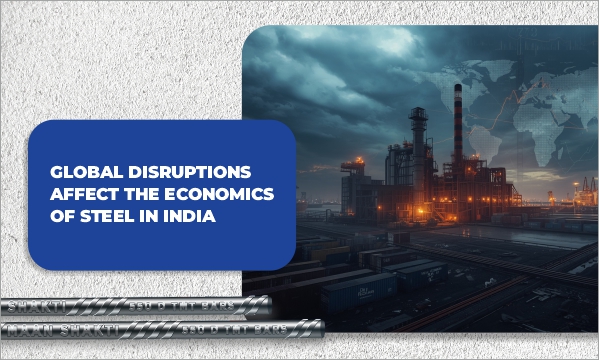
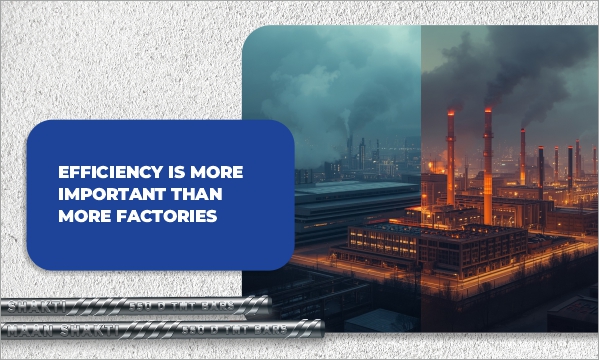
Why the Future of Steel Is About Efficiency, Not More Factories
May 6, 2026

bluant digital
Why the Future of Steel Is About Efficiency, Not More Factories
India’s steel industry has grown rapidly over the last decade. New plants have been announced, capacity targets have been set, and investment plans continue to rise. For a long time, growth in the steel sector has been measured by how much new capacity is added.
But the situation today is changing.
Simply building more plants is no longer the best way to grow. The real challenge facing the Indian steel industry is not lack of capacity. It is low utilisation, rising costs, and shrinking margins. Adding more factories without improving efficiency can make the industry weaker, not stronger.
This blog explains why India needs fewer new steel plants and more focus on efficiency, utilisation, and smarter growth.
India’s Steel Growth Story So Far
India is one of the largest steel producers in the world. Over the years, the industry has expanded to meet growing demand from infrastructure, construction, automobiles, and manufacturing.
Large companies have built massive integrated plants. At the same time, hundreds of small and mid-sized steel units operate across the country.
The focus has been clear:
- Build more capacity
- Produce more steel
- Meet rising demand
This strategy worked well when demand was growing quickly and costs were stable.
But the current situation is different.
The Problem of Underutilised Capacity
One of the biggest challenges today is that many steel plants in India are not running at full capacity.
Several reasons contribute to this:
- Volatile demand in certain segments
- High raw material and energy costs
- Limited working capital
- Supply chain disruptions
- Lower export demand at times
When plants do not operate at full capacity, the cost per tonne of steel increases. Fixed costs remain the same, but output drops. This puts pressure on profitability.
Adding more capacity in such a situation does not solve the problem. It can actually make it worse.
Rising Costs Are Squeezing Margins
Steel production depends heavily on:
- Iron ore
- Coking coal
- Scrap
- Power and fuel
In recent years, the cost of these inputs has become highly volatile. Energy prices have also increased due to global factors.
At the same time, steel prices cannot always be increased in line with costs. Market competition and demand conditions limit how much manufacturers can pass on to customers.
This leads to:
- Shrinking profit margins
- Cash flow pressure
- Higher financial risk
In such a scenario, building new plants requires heavy investment and increases financial pressure further.
Why More Capacity Is Not the Answer Right Now
Building a steel plant requires huge capital investment. It also takes years before the plant starts generating returns.
If demand does not grow as fast as capacity, the market becomes oversupplied. This leads to:
- Lower prices
- Intense competition
- Financial stress for producers
Instead of solving problems, excess capacity creates new ones.
The smarter approach is to improve the performance of existing plants rather than building new ones.
Efficiency Matters More Than Expansion
A smaller, well-managed plant can be more profitable than a larger but inefficient one.
Improving efficiency can include:
- Better energy management
- Process optimisation
- Reduced downtime
- Improved maintenance practices
- Better raw material planning
Even a small improvement in efficiency can significantly reduce costs and improve profitability.
Companies that focus on efficiency are better positioned to handle market fluctuations.
The Importance of Capacity Utilisation
Capacity utilisation is a key measure of performance in the steel industry.
High utilisation means:
- Lower cost per tonne
- Better return on investment
- Stronger financial performance
Low utilisation means:
- Higher production costs
- Lower profitability
- Increased financial stress
Instead of building new plants, improving utilisation of existing capacity should be the priority.
Shift Toward Value-Added Products
Another important change needed in the industry is a move away from commodity steel toward value-added products.
Basic steel products often face intense price competition. Value-added steel, on the other hand, can offer:
- Better margins
- More stable demand
- Stronger customer relationships
Examples of value-added products include:
- High-strength steel
- Special grades for automotive and engineering
- Corrosion-resistant steel
Focusing on these products can improve profitability without needing to increase capacity.
Financial Discipline Is Critical
Large projects require significant investment. Taking on more debt to build new plants can be risky, especially in uncertain market conditions.
Companies must carefully assess:
- Return on investment
- Market demand
- Risk factors
- Long-term sustainability
Strong financial discipline ensures long-term stability and reduces risk.
The Role of Technology and Automation
Technology can play a major role in improving productivity.
Modern technologies can help:
- Reduce energy consumption
- Improve product quality
- Reduce waste
- Improve safety
Digital tools and automation can make operations more efficient and cost-effective.
Investing in technology often delivers better returns than building new capacity.
Focus on Sustainability
Environmental concerns are becoming increasingly important in the steel industry.
Instead of expanding capacity, companies can invest in:
- Energy-efficient technologies
- Waste reduction systems
- Lower carbon production methods
These improvements not only reduce costs but also help meet future environmental regulations.
A Smarter Growth Strategy for the Future
The future of the Indian steel industry will not be defined by who builds the biggest plants.
It will be defined by:
- Efficiency
- Innovation
- Smart investment
- Strong financial management
Companies that focus on improving existing operations will be better prepared for market changes.
Conclusion
India’s steel industry has reached a point where more capacity is not the immediate solution. The real need is better utilisation of existing assets, improved efficiency, and a shift toward value-added products.
Instead of focusing on building new plants, the industry must focus on:
- Smarter operations
- Better cost control
- Strong financial discipline
- Sustainable growth
In today’s environment, the goal should not be to produce more steel.
It should be to produce steel more efficiently and profitably.
This approach will help the industry grow stronger and remain competitive in the long run.
-
No tags for this post